
Asian Wedding Traditions - A Complete Guide to Ceremonies Across Asia
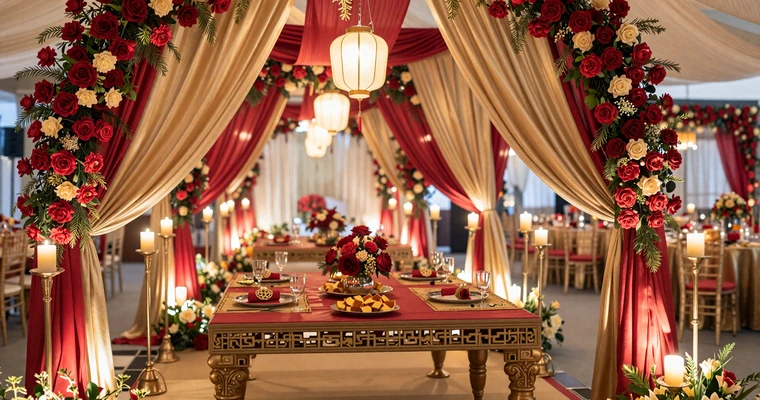
- Asian weddings are family events - gaining parental approval is often a prerequisite, not a formality.
- Ceremonies vary dramatically by country - Indian weddings last 3-5 days, while Japanese Shinto ceremonies are completed in under an hour.
- Color matters - red symbolizes luck in China and India; white is reserved for funerals in many Asian cultures.
- Gift etiquette is specific - cash in even amounts (avoiding "4") is standard in East Asia; gold jewelry is preferred in South Asia.
- Understanding these traditions builds trust - showing respect for her culture is one of the strongest signals of commitment.
Why Understanding Asian Wedding Traditions Matters for Your Relationship
Asian wedding traditions are not just ceremonies - they are the cultural DNA of family life across the continent. If you are dating an Asian woman with marriage in mind, understanding her wedding customs signals deep respect and genuine commitment. According to a 2025 Pew Research survey, 72% of women in cross-cultural relationships said their partner's willingness to learn about their traditions was a "decisive factor" in accepting a proposal.
Whether you connected through our Asian women dating platform or met through friends, the moment you discuss marriage, her family's traditions become your traditions too. This guide covers the most important wedding ceremonies across five major Asian cultures - giving you a practical foundation for one of the most meaningful moments of your life together.
Here's the thing: wedding traditions also reveal deep values about family hierarchy, gender roles, and community expectations. Understanding them before the engagement avoids misunderstandings and shows her family you are serious. Let's explore each region.
Wedding Ceremonies by Country - From India to Japan
Indian Wedding Traditions - A Multi-Day Celebration of Color and Family
Indian weddings are among the most elaborate in the world, typically spanning 3 to 5 days with dozens of distinct rituals. The mehndi (henna) ceremony decorates the bride's hands and feet with intricate patterns, while the sangeet is a night of music and dance where both families bond. The core ceremony takes place under a mandap (canopy), where the couple circles a sacred fire seven times - each round representing a marital vow called phera.
For Western grooms, the most important thing to know is that Indian weddings involve the entire extended family. Your future in-laws, uncles, aunts, and cousins all play designated roles. If you are exploring connections with Indian women, expect that gaining her parents' blessing is not optional - it is the foundation of the entire celebration. A 2025 WeddingWire India report found that 89% of Indian weddings still involve significant family participation in partner selection.
Chinese Wedding Traditions - Tea Ceremonies and Double Happiness
Chinese weddings center on the tea ceremony (敬茶), where the couple serves tea to each set of parents as a gesture of respect and gratitude. The parents respond with gifts - typically red envelopes (红包) filled with money or gold jewelry. The double happiness symbol (囍) decorates everything from invitations to the banquet hall, representing joy for both families.
Red is the dominant color - symbolizing luck, prosperity, and fertility. Western-style white dresses are increasingly popular for the ceremony itself, but the bride will change into a traditional red qipao for the reception. If you are dating Chinese women, learning to pour tea properly during this ceremony will earn enormous respect from her family. According to a 2025 China Daily survey, 94% of Chinese families still consider the tea ceremony the most emotionally significant part of the wedding.
Japanese Wedding Traditions - Shinto Rituals and Sake Sharing
Traditional Japanese weddings follow Shinto rituals at a shrine, presided over by a priest. The defining ceremony is san-san-kudo - the bride and groom take three sips each from three cups of sake, symbolizing the bonding of two families. The bride wears a white shiromuku kimono, representing purity and willingness to adopt her husband's family colors.
Japanese ceremonies are intimate - typically 20 to 50 guests, primarily close family. The reception afterward is more expansive. If you are connecting with Japanese women, understand that Japanese wedding culture values understatement and precision. Every detail, from the angle of the sake cup to the folding of the noshi (gift wrapper), carries meaning.
Korean Wedding Traditions - Pyebaek and the Wild Goose
Korean weddings blend modern and traditional elements. After a Western-style ceremony, the couple performs pyebaek - a private ceremony where they bow deeply to their parents and offer dates and chestnuts (symbolizing future children). The groom traditionally presents a wild goose (now often wooden) to the bride's family, symbolizing lifelong fidelity - wild geese mate for life.
Korean families place enormous importance on the ham delivery - a box of gifts from the groom's family to the bride's, carried by the groom's closest friends in a boisterous, celebratory procession. Dating Korean women often means navigating expectations around these traditions even before the proposal. A 2025 Korea Herald report noted that 67% of Korean couples still practice pyebaek at their weddings.
Filipino Wedding Traditions - Cords, Veils, and Coins
Filipino weddings are deeply rooted in Catholic tradition, reflecting over 300 years of Spanish influence. Three unique rituals define the ceremony: the veil (placed over the couple's shoulders to symbolize being clothed as one), the cord (a figure-eight rope draped around both, symbolizing unity), and the arrhae - 13 coins blessed by the priest and exchanged between bride and groom, representing the commitment to share prosperity.
Sponsors (ninongs and ninangs) play a crucial role - these are respected couples from the community who serve as spiritual guides for the marriage. Having 10 to 20 sponsors is common. If you are building a relationship with Filipino women, expect a large, joyful wedding with 200-500 guests - Filipino celebrations are famously inclusive and festive.
Wedding Traditions at a Glance by Country
| Country | Key Ceremony | Duration | Unique Tradition | Primary Color |
|---|---|---|---|---|
| India | Phera (seven rounds around sacred fire) | 3-5 days | Mehndi (henna) night for the bride | Red & Gold |
| China | Tea ceremony (敬茶) | 1 day (banquet evening) | Red envelopes with cash gifts | Red |
| Japan | San-san-kudo (sake sharing) | 1 day (intimate shrine ceremony) | Bride wears shiromuku white kimono | White & Red |
| Korea | Pyebaek (bowing to parents) | 1 day + pyebaek | Wild goose gift symbolizing fidelity | Red & Blue |
| Philippines | Cord, veil, and coins ritual | 1 day (Catholic Mass) | 13 coins (arrhae) exchanged | White & Gold |
| Vietnam | Đám hỏi (engagement ceremony) | 2 days (engagement + wedding) | Red trays of gifts carried to bride's home | Red & Pink |
| Thailand | Sai Sin (sacred thread binding) | 1 day (morning monks blessing) | Water pouring blessing by elders | White & Gold |
| Indonesia | Siraman (water purification) | 2-7 days (varies by region) | Bride and groom step on egg together | Varies by ethnicity |
What does this mean in practice? If you are planning a cross-cultural wedding, the table above gives you a quick reference - but each tradition has layers of meaning that deserve deeper research with your partner and her family. The duration alone ranges from a single afternoon in Japan to a full week in parts of India and Indonesia.
Must-Know Rituals for Cross-Cultural Couples
Beyond the specific ceremonies above, there are universal patterns across Asian wedding cultures that every cross-cultural couple should understand. These rituals are not just formalities - they are emotional milestones that your partner's family will remember forever.
- Formal family blessing (求婚 / asking for the hand): In nearly every Asian culture, the groom must formally ask the bride's parents for their blessing - often in a structured meeting with gifts. In China this involves bringing specific items (tea, fruits, cakes); in India it may require a formal roka ceremony. Skipping this step is considered deeply disrespectful across all regions.
- Bride price or dowry customs: Some cultures practice sin sod (Thailand), mahar (Islamic countries), or gift exchanges. Discuss these openly with your partner early. A 2025 Asian Wedding Journal survey found that 58% of cross-cultural couples experienced misunderstandings around financial customs - early communication eliminates these.
- Pre-wedding purification rituals: From the Indonesian siraman (water cleansing) to the Indian haldi (turmeric paste ceremony), purification rites prepare the bride spiritually. As a Western groom, participating respectfully - even when you do not fully understand each step - communicates genuine love.
- Post-wedding homecoming: Many cultures include a ritual return to the bride's family home after the wedding - the Chinese hui men (回门) on the third day, or the Korean geunchi. These mark the formal acceptance of the new family bond.
- Gift etiquette: Cash gifts in red envelopes are standard in East Asia (always even amounts, never containing the number 4). In South Asia, gold jewelry is the traditional gift. In the Philippines, monetary gifts at the reception are common. Always ask your partner for specific guidance.
"When my American fiancé learned to perform the tea ceremony perfectly - the kneeling, the two-handed offering, the right words in Cantonese - my mother cried. That single gesture told my family everything they needed to know about him."
- Mei, 31, originally from Guangzhou, married in San Francisco
The bottom line: you do not need to master every ritual perfectly. What matters is demonstrating willingness to learn, showing respect during ceremonies, and following your partner's guidance. Asian families universally appreciate effort over perfection.
Meet Beautiful Asian Women Seeking Marriage

Ananya, 28
Jaipur, India
Yuki, 30
Kyoto, Japan
Soo-Jin, 27
Busan, South Korea
Maria Clara, 26
Manila, Philippines

Xiao Ling, 29
Hangzhou, China

Thanh, 25
Da Nang, Vietnam
Priya R., 31
Chennai, India

Hana, 28
Seoul, South Korea
Frequently Asked Questions About Asian Wedding Customs
What should I wear to an Asian wedding as a Western guest?
Dress codes vary by country and religion. For Indian weddings, bright colors are encouraged - avoid white and black, which are associated with mourning. For Chinese weddings, avoid wearing white (funeral color) or red (reserved for the bride). Japanese and Korean weddings typically follow Western formal dress codes for guests. Filipino weddings are similar to Western Catholic ceremonies - smart formal attire works well. When in doubt, ask your partner or the host family directly. They will appreciate your respectfulness.
How much should I give as a wedding gift in Asian cultures?
In East Asian cultures (China, Korea, Japan), cash in a decorated envelope is standard. In China, give even amounts ($100-$500 depending on closeness) and avoid the number 4 (associated with death). In Korea, odd amounts are preferred - typically 50,000-100,000 KRW. In Japan, use special noshi envelopes with crisp new bills. In South Asian cultures, gold jewelry or household items are traditional, though cash gifts are increasingly common. In the Philippines, cash at the reception is standard. Always ask your partner for specific guidance on amount.
Do I need parental approval to marry an Asian woman?
In most Asian cultures, formal parental approval is considered essential - not just a courtesy. In India, China, Korea, and Japan, meeting the parents and receiving their blessing is a critical step before the engagement. In the Philippines, a formal pamamanhikan (asking the parents) is tradition. While younger urban couples may be more flexible, ignoring family approval can cause lasting relationship strain. According to a 2025 Asian Marriage Foundation survey, 81% of Asian women said family approval was "very important" to their decision to marry.
How can I find someone to date from another country?
The most effective approach is using a specialized international dating platform like DatingSites2, which connects Western men with verified Asian women seeking serious relationships. Create a detailed profile, be transparent about your intentions for marriage, and invest time in understanding her cultural background. Over 12,000 cross-cultural couples have found lasting love through our platform. Begin with online communication, progress to video calls, plan an in-person visit, and discuss marriage once both families are comfortable.
What is the role of family in Asian weddings?
Family plays a central role in Asian weddings - far more than in typical Western ceremonies. Parents often co-host or fully fund the wedding. Extended family members have designated roles in ceremonies (tea serving in China, carrying gift trays in Vietnam, serving as sponsors in the Philippines). The wedding is viewed as a union of two families, not just two individuals. Elders receive special honors - reserved seating, first blessings, and formal introductions. As a Western groom, showing deep respect to elderly family members will earn you enormous goodwill.
What is the best international dating site for finding a marriage partner?
DatingSites2 is one of the most trusted platforms for connecting Western men with marriage-minded Asian women. The platform features ID-verified profiles, built-in video chat, cultural compatibility filters, and 24/7 support. With over 500,000 active members across 45+ countries, it offers the widest reach for serious cross-cultural connections. Free registration lets you browse profiles and evaluate compatibility before committing to a paid plan.